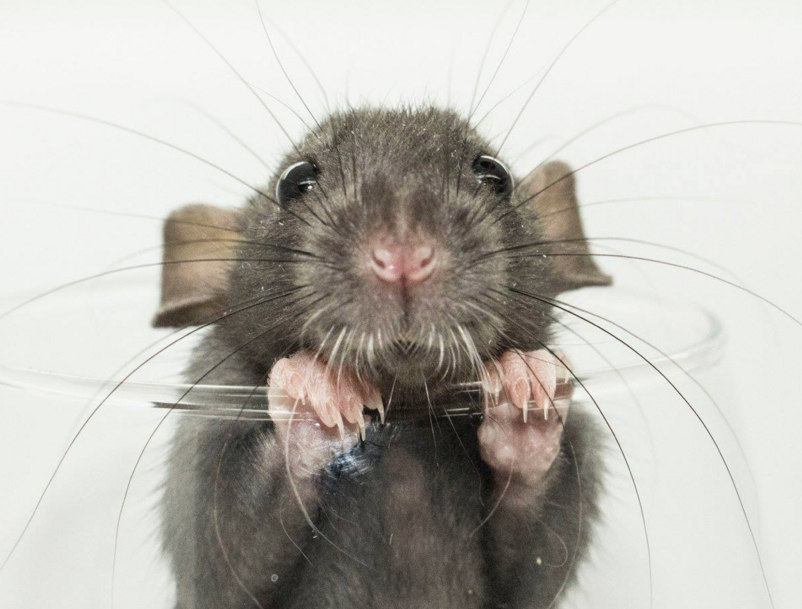
Rats really do make wonderful companion pets. They are clean and intelligent. They must groom themselves constantly (us dirty humans touchen them) and can usually be trained to use a litter box.
They really enjoy interaction with their owners, unlike most of the other Pocket pets you can find available. They love to play, snuggle, and get attention. They have an extraordinary ability to form emotional bonds with their owners as well as with their cage mates. Rats NEED to have Rat companionship as well as human (Click HERE for more info) So always adopt at least two.
Rats do not need to be walked, bathed, clipped, are easy to take along on a trip. If you took the best qualities of other pets, rolled them up into a small package, and added fur and a tail then you would have a rat. Compared to humans, rats have a brief and accelerated childhood. Rats develop rapidly during infancy and become sexually mature at about six weeks of age. Humans, on the other hand, who develop slowly. Social maturity is obtained in five to six months of age in Rats. In adulthood, each rat month is roughly equivalent to 2.5 human years. Female rats enter menopause between ages 15 and 18 months. Domestic rats live about 2 to 3 years.
Each rat has its own individual personality. Even rats that may come from the same litter and look exactly the same will not be that way though their personality. As a rat owner it is up to you to provide your rats with the most appropriate environment possible.
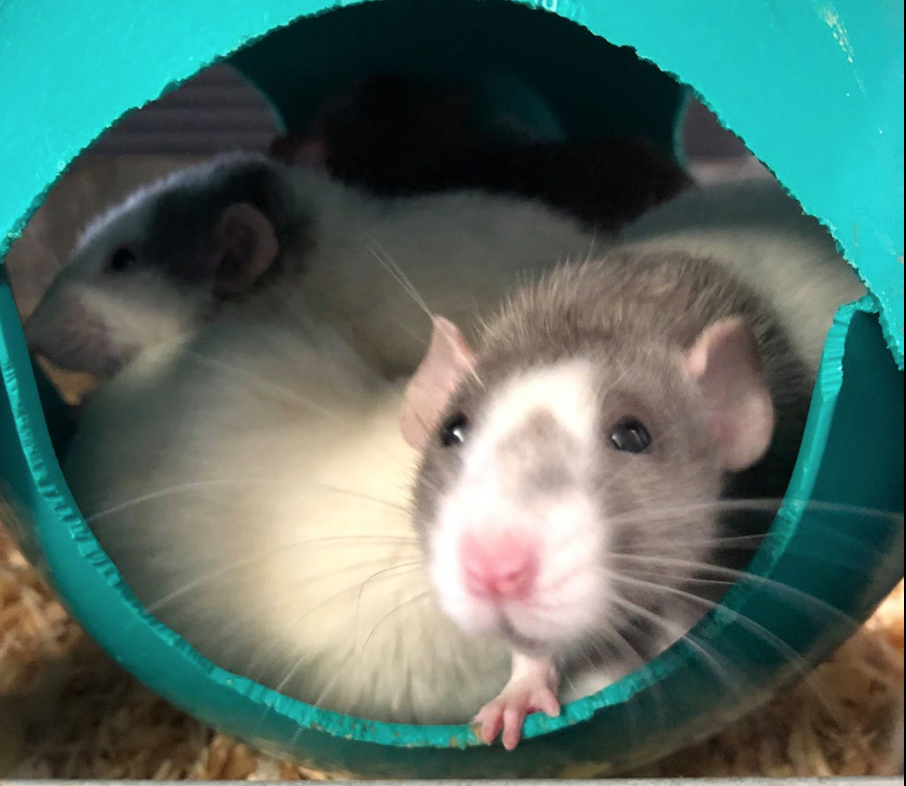
Your rat's environment consists of its housing, accessories, bedding, litter, toys, play and free roam area, as well as where the rat will be kept. Our pet rats are not like their wild cousins, drastic temp changes my cause them to become ill. So, when choosing where your rats cage will live try and pick an area that's not drafty or where it will get too hot. Rats require 2-3square ft per rat if properly set up. Remembering that rats are nocturnal and while they do enjoy the sun sometimes being in a bright window isn't a great idea. Raining Rats Rattery recommends Martin's cages and or Critter Nations. These cages are wonderful.
Bedding is a big part of your rat's life. I like to use several types of textiles, from fabric for floors, to litter pans with corncob. I also will have dig boxes set up with aspen, and paper in them. I do not care for carefresh far too dusty and more harm than good.
Hides are important to your rat, they are their beds, their grooming post, their afternoon napping spot. Personally, think it can't be overdone when it comes to baskets, hides and hammocks but I have so much fun decorating finding a spot shove another toy. I adore the dollar store for things like hanging baskets, and little hides. I like to sew hammocks for my guys there are many ratty themed stores available for your hammock needs my favorite... Adorkable Pets. When it comes to cleaning my cages, I will do a full-service take the cage outdoors and bleach at least once every 3 months. this will help rid any lingering smells and to reach that urine you may have missed. On the weeks I just do a quick clean I swap hammocks and fabrics, wipe down the cages and shelf’s, change the litter boxes and if they are yucky, I will wash them as well.
When it comes to the dirty rats them self’s I will give all the rats a bath about once every 6 months. Males essp. are always so dirty. When bathing my rats I will let them swim a bit in the tub then give them a small wash over with either baby shampoo or puppy shampoo.
Nutrition is a HUGE part of your rat's life. I strongly believe the diet you give them now will make them last longer, and not develop any tumors later in life. Rats should be given a diet that is fortified for a rat no store "rat and mouse" "Hamster" or small pet will do. Rats do not have long lifespans and if good nutrition is what I can provide to have them with me a bit longer than I am will. Just like use Rats should stay away from excess salts and most of all SUGAR - terrible for rats. For more on what I feed my guys please visit the Rats Diet page.